2026-11-05 · Mike Metcalf
Flooded Basement Cleanup for Cedar Valley Homes
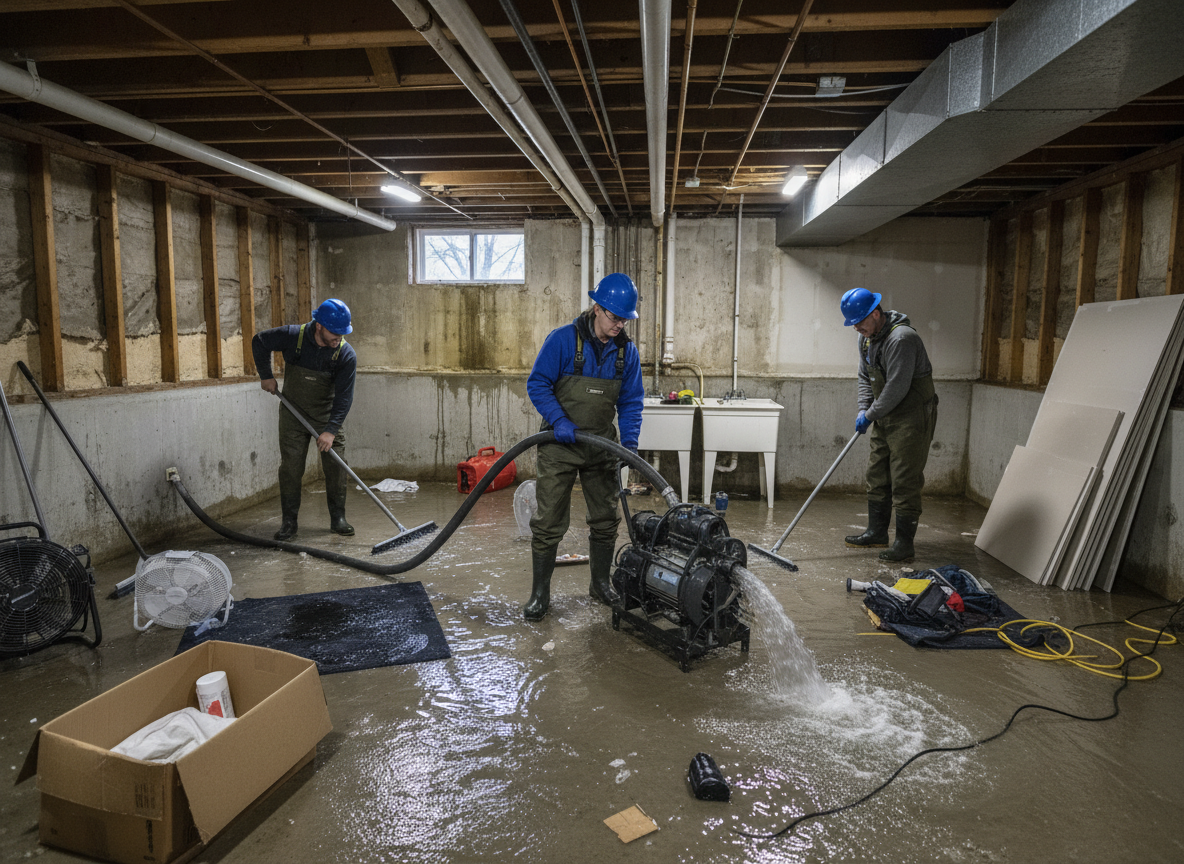
Flooded basement cleanup for Cedar Valley homes starts with rapid water removal followed by targeted drying to limit mold growth in the humid continental climate of Black Hawk County. Homes built before 1970 on the West Side and East Side often have stone foundations and poor grading that let water pool quickly after storms. Crews prioritize extraction within the first hours, then run commercial dehumidifiers for several days until moisture readings drop below 15 percent. This sequence protects structural wood and finishes that absorb water fast in older Waterloo stock.
Local Climate and Housing Factors That Drive Basement Flooding
Black Hawk County sees hot, humid summers that deliver intense downpours and cold winters that freeze supply lines in unheated basements. Older homes near the Grout Museum District and along the Cedar Falls border commonly have clay soils that hold water against foundation walls. These conditions turn a single heavy rain into standing water that reaches finished areas within hours. Crews see the same pattern on the West Side where lots slope toward the house rather than away from it. Understanding these site-specific realities lets restoration teams focus equipment on the lowest corners first instead of treating the entire space uniformly.
Step-by-Step Flooded Basement Cleanup Process
Begin by shutting off power to the affected circuits and documenting water depth with photos before any removal. Next, extract standing water using submersible pumps rated for 50 gallons per minute or higher, moving outward from the deepest section. Once the floor is clear, remove saturated drywall and insulation up to 18 inches above the water line to stop hidden mold. Place air movers and dehumidifiers in a grid pattern, checking readings every 12 hours until equilibrium is reached. Homeowners in Downtown Waterloo often need extra passes on concrete floors because moisture lingers in the slab for days longer than in carpeted spaces. This methodical approach keeps secondary damage from spreading into adjacent rooms.
When to Call for Professional Extraction and Drying
If water reaches electrical outlets or covers more than 100 square feet, professional equipment becomes necessary to meet drying standards. Residents near the Sullivan Brothers Veterans Museum frequently face sewage-tinged water after heavy rains because combined sewers back up, requiring containment barriers and specialized disposal. Linking extraction with structural drying prevents the 48-hour window in which mold colonies form on wet cellulose. Homeowners who attempt only shop-vac removal usually see recurring musty odors within a week because hidden moisture remains behind baseboards and under stairs.
Long-Term Prevention for Cedar Valley Homes
Re-grade soil so it slopes six inches over the first six feet away from the foundation, and extend downspouts at least five feet from the wall. Install a battery-backup sump pump in homes along the East Side where power outages coincide with storms. Check and seal expansion joints around basement windows every two years, especially on properties bordering Cedar Rapids where freeze-thaw cycles are slightly milder but still damaging. These targeted fixes address the actual water-entry points common to Black Hawk County housing rather than generic advice.
For continued reading on immediate actions, review What to Do in the First 24 Hours After Water Damage in Waterloo. Homeowners dealing with larger events can also explore Flood Damage Cleanup and Basement Flood Cleanup services that cover the full Cedar Valley region.