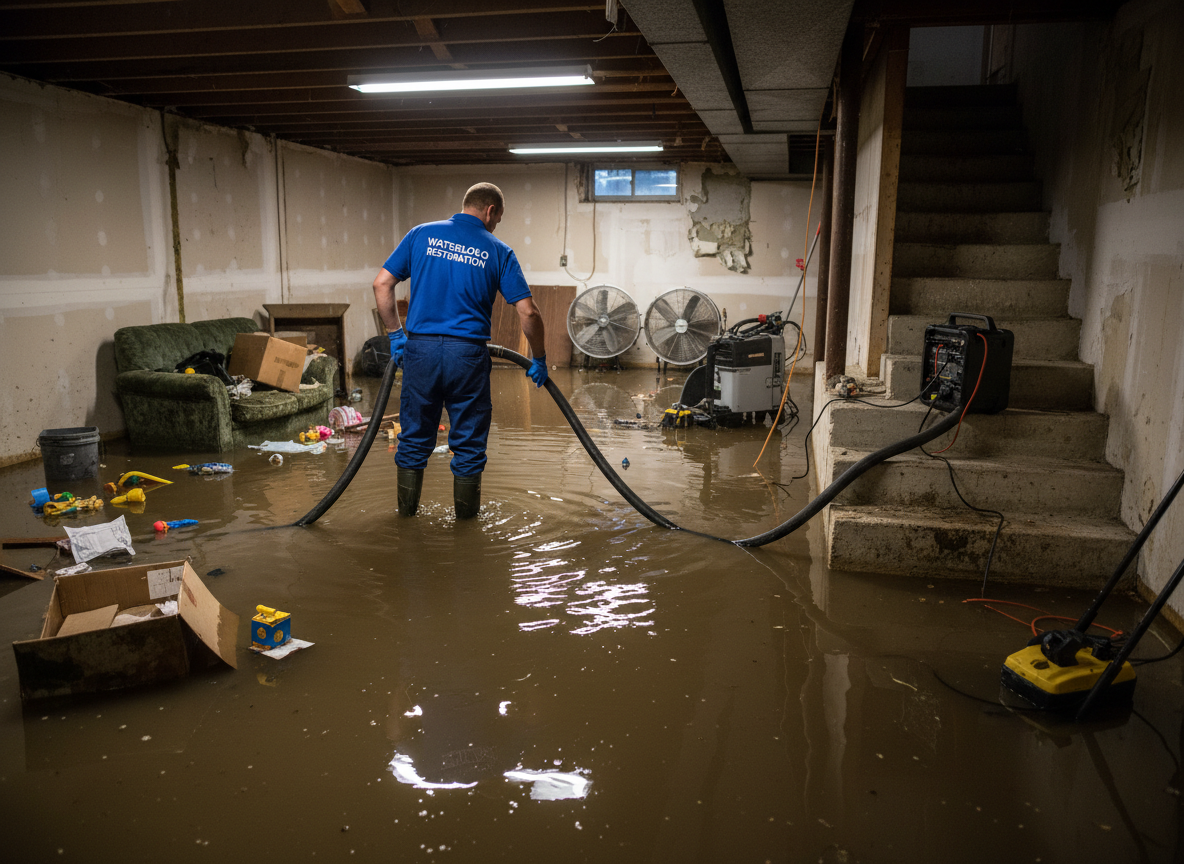
Waterloo basements in West Side and East Side neighborhoods often sit on clay-heavy soils that hold moisture after spring thaw or summer storms, pushing water through older stone or block foundations common in Black Hawk County housing stock. Frozen pipe bursts during cold continental winters create sudden inflows that saturate dirt floors and wooden joists, requiring immediate extraction before mold sets in behind lath-and-plaster walls. Properties near the Cedar Falls border face additional runoff from higher terrain, while Downtown homes built before modern grading can see seepage along shared walls near the Grout Museum District.
Extraction begins with submersible pumps rated for the volume typical in these older structures, followed by air movers and dehumidifiers sized for the high summer humidity that slows drying in unvented basements. Edge cases include hidden water trapped under concrete slabs poured over dirt in 1940s–1960s homes, or contamination from combined sewer backups during heavy Cedar Rapids-area rainfall events. Technicians check for compromised sill plates and rim joists, because untreated moisture here leads to structural softening that shows up first in the colder months when heating systems run constantly.
After water removal, moisture mapping with meters identifies pockets behind finished walls or under stairs that generic drying misses. In flood-prone Cedar Falls border areas, we often install temporary French drains or redirect downspouts to prevent repeat intrusion from the same seasonal pattern. Homeowners should avoid running household fans alone, as they can spread spores through the HVAC systems typical in these mid-century homes without proper containment barriers.
Technician insight
In Waterloo, the thing that catches most people out with Basement Flood Cleanup is how clay soil around West Side and East Side foundations stays saturated long after the rain stops, especially after winter snow melt. Older homes near the Grout Museum District often have no proper drainage, so water just pools against the stone walls again the next cold snap.
West Side Pipe Burst
A homeowner on the West Side called after a frozen pipe burst during a January cold snap. We found water had wicked up into floor joists and behind paneling in a 1950s basement. Extraction and targeted drying prevented mold spread into the main floor HVAC, and we added a vapor barrier to the dirt section to reduce future seepage from the clay soil.
Basement Flood Cleanup Services We Offer
✓Frozen Pipe Burst Extraction
Rapid pump-out and drying after winter pipe failures common in uninsulated West Side basements where temperatures drop sharply.
✓Sump Pump Failure Cleanup
Removal of backed-up groundwater when pumps fail during heavy spring rains or power outages in Black Hawk County homes.
✓Storm Water Removal
Extraction of rainwater that enters through windows or foundation cracks after summer thunderstorms in East Side neighborhoods.
✓Sewage Contaminated Water Cleanup
Safe extraction and disposal of combined sewer backups that affect older Downtown properties during regional flooding.
✓Dirt Floor Moisture Control
Drying and vapor barrier installation for older basements with exposed soil that retains water from clay conditions.
Basement Flood Cleanup Cost in Waterloo, IA
| Service | Typical Range | What Affects It |
|---|---|---|
| Initial Assessment | Free | Includes moisture mapping for Black Hawk County homes |
| Water Extraction | $350–$900 | Depends on depth and whether sewage is present |
| Drying Equipment Rental | $250–$600 | Varies by number of days required in humid summers |
| Dirt Floor Treatment | $400–$750 | Includes vapor barrier for older West Side homes |
Ranges are typical for Waterloo, IA and confirmed with an exact written quote before any work starts.
How it works
- 1
On-Site Assessment
Technician inspects water source, measures moisture levels in walls and floors, and maps affected zones in the specific Waterloo basement layout.
- 2
Water Extraction
Submersible pumps and wet vacuums remove standing water, focusing on low spots common in older Black Hawk County foundations.
- 3
Drying and Dehumidification
Industrial air movers and dehumidifiers run until moisture readings drop below 15 percent, accounting for local summer humidity.
- 4
Final Inspection
Re-check all surfaces and recommend any needed vapor barriers or drainage fixes to address recurring Cedar Falls border runoff.
Pricing
Upfront quotes based on water volume, access difficulty, and drying time needed for each Waterloo basement.