Waterloo's humid continental climate brings hot, muggy summers that drive rapid mold growth after heavy rains and cold winters that push condensation into uninsulated walls and crawl spaces. Older homes on the West Side and East Side often feature balloon-frame construction with plaster over lath, which hides moisture behind surfaces until colonies spread into joists. Properties near the Cedar Falls border see extra risk from shared drainage patterns that back up during spring thaw, while Downtown basements close to the Cedar River experience periodic seepage that soaks sill plates.
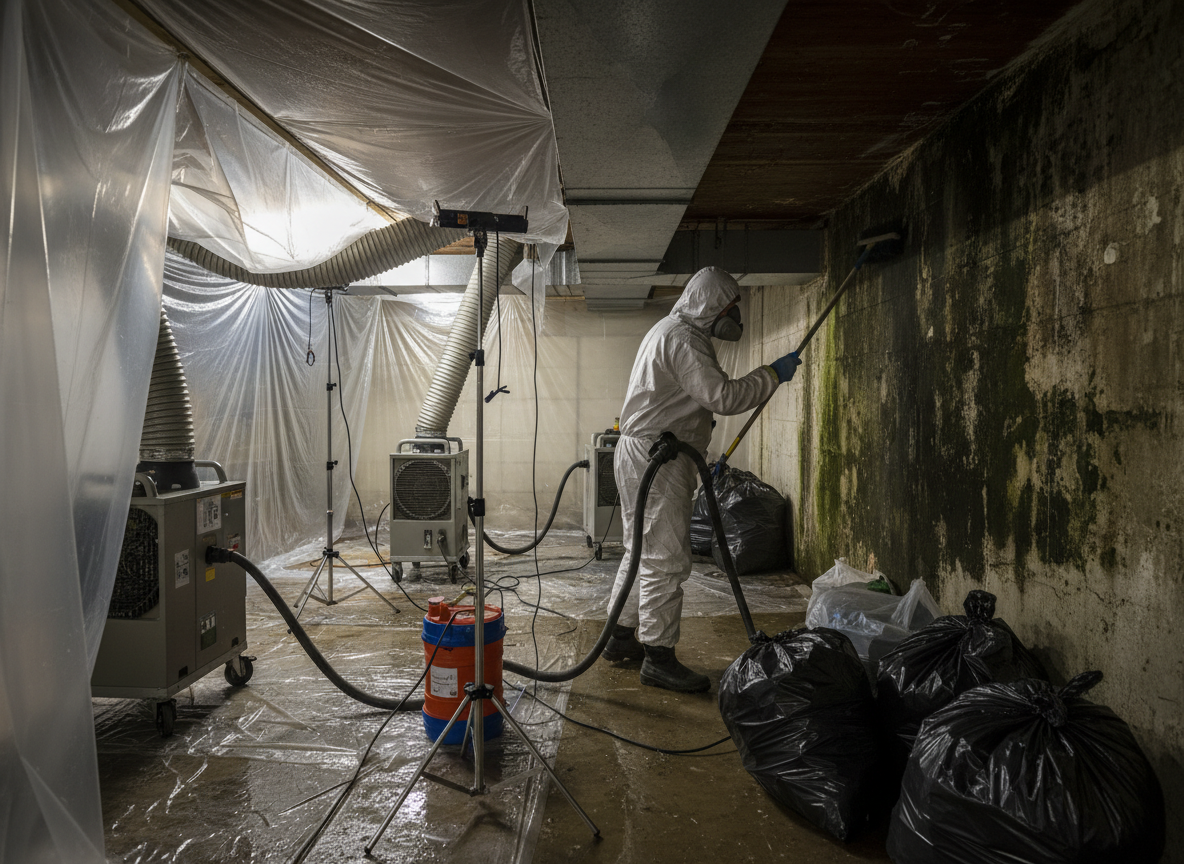
Mold remediation here starts with moisture mapping using thermal imaging because visual inspection misses growth in the dense insulation common in 1920s-1950s stock around the Grout Museum District. Containment uses negative air machines with HEPA filtration to prevent spores from migrating into living areas during removal. Porous materials like carpet pad or drywall in flood-prone crawl spaces are cut out rather than treated in place, and affected HVAC runs near the Sullivan Brothers Veterans Museum area are cleaned or replaced to stop recirculation.
After source removal, drying targets 35-45% relative humidity using commercial dehumidifiers sized for the square footage and local dew points. Final clearance testing checks both air and surface samples because Black Hawk County winters can leave residual moisture that reactivates colonies weeks later. Homeowners along the West Side often overlook attic ventilation issues that combine with summer humidity to create recurring problems above finished ceilings.
Technician insight
In Waterloo, the thing that catches most people out with Mold Remediation is condensation forming behind plaster in 1920s balloon-frame homes on the West Side during the first real cold snap after a wet fall; the moisture sits in the cavities all winter and only shows as musty air once the furnace kicks on.
West Side Basement After Spring Thaw
A homeowner on the West Side noticed a musty smell in the finished basement two weeks after snow melt. Inspection revealed water had wicked up from the footer into the drywall behind the paneling. We removed the lower four feet of drywall and insulation, treated the joists, and ran drying equipment for five days until readings dropped below 12 percent. Clearance samples passed and the space was ready for new finishes.
Mold Remediation Services We Offer
✓Basement Mold Remediation
Removes colonies from concrete walls and joists in Waterloo basements prone to river seepage and spring thaw water.
✓Attic Mold Removal
Treats growth on rafters and insulation caused by ice dams and poor ventilation during cold Black Hawk County winters.
✓Crawl Space Mold Treatment
Encapsulates and removes mold in dirt-floor crawl spaces common on the East Side where groundwater lingers after heavy rains.
✓Post-Flood Mold Cleanup
Handles secondary mold after Cedar River or storm flooding in Downtown and Cedar Falls border properties.
✓Drywall and Insulation Replacement
Cuts out and replaces saturated materials behind which mold hides in older plaster-and-lath homes across Waterloo.
✓HVAC Mold Remediation
Cleans or replaces contaminated ductwork that spreads spores through homes near the Waterloo Center for the Arts.
Mold Remediation Cost in Waterloo, IA
| Service | Typical Range | What Affects It |
|---|---|---|
| Small localized area under 10 sq ft | $400–$900 | Higher when insulation or drywall removal is required |
| Basement or crawl space remediation | $1,200–$3,500 | Increases with river-adjacent properties or extensive joist work |
| Attic mold treatment | $800–$2,200 | Affected by ice dam damage and ventilation upgrades needed |
| HVAC system cleaning | $600–$1,800 | Varies with duct length and number of returns in older homes |
Ranges are typical for Waterloo, IA and confirmed with an exact written quote before any work starts.
How it works
- 1
Moisture Assessment
Map hidden water with thermal cameras and moisture meters in basements, attics, and crawl spaces typical of Waterloo's older housing.
- 2
Containment Setup
Isolate affected zones with plastic barriers and negative air machines to keep spores from reaching unaffected rooms.
- 3
Removal and Disposal
Cut out and bag porous materials, then HEPA vacuum and wipe non-porous surfaces before disposal per local waste rules.
- 4
Drying and Clearance
Run commercial drying equipment until humidity targets are met, then perform air and surface testing before rebuild.
Pricing
Cost depends on square footage, hidden extent, and whether structural materials must be replaced.