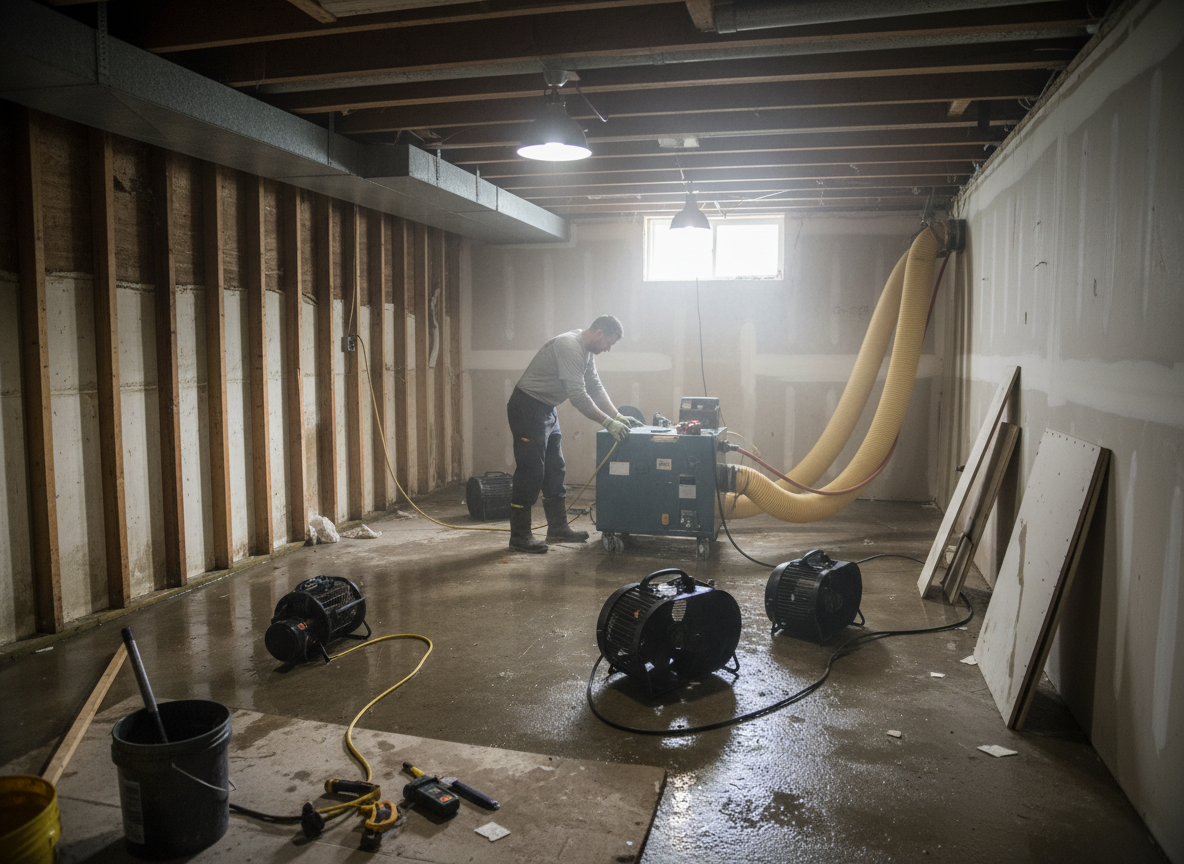
Water damage in Waterloo often hits older housing stock on the East Side and Downtown, where plaster walls and balloon-framed construction allow moisture to travel into cavities that standard fans cannot reach. After heavy spring rains or summer storms common in our humid continental climate, we set up commercial air movers and dehumidifiers calibrated for the cold winters that follow, because dropping temperatures slow evaporation and raise the risk of hidden mold behind baseboards. Properties along the Cedar Falls border areas frequently sit on clay-heavy soils that hold water longer, so we use moisture meters on subfloors and joists before declaring a structure dry.
In West Side neighborhoods, slab-on-grade homes from the mid-century era trap water under tile and carpet padding, requiring targeted drying under cabinets and in HVAC returns that homeowners rarely check. We monitor relative humidity daily because our region’s rapid temperature swings can push dew points inside walls even after surface water is gone. Edge cases include floodwater from the Cedar River that carries silt into brick foundations near the Grout Museum District, where we must pull base trim and drill small weep holes to allow airflow without damaging original woodwork.
Dehumidification here differs from Cedar Rapids jobs because Black Hawk County summers stay more humid, forcing us to run low-grain refrigerant units longer to pull moisture from oak flooring and lath-and-plaster ceilings. We never leave equipment running unattended in occupied homes because power fluctuations during winter storms can damage both the machines and the structure. Final clearance involves checking multiple points with pin and pinless meters until readings match unaffected areas, then documenting the process for insurance adjusters who serve Waterloo and nearby communities.
Technician insight
In Waterloo, the thing that catches most people out with Structural Drying & Dehumidification is how cold winters lock moisture inside the plaster walls of East Side homes built before 1950; once temperatures drop, homeowners think the job is done but hidden pockets stay wet until spring and feed mold that shows up months later near the Sullivan Brothers Veterans Museum area.
West Side Slab Home After Summer Storm
Water entered under a kitchen door during a July downpour and wicked into the subfloor of a 1960s home on the West Side. We mapped elevated readings under cabinets and in the adjacent hallway. Commercial mats and dehumidifiers ran for five days while we monitored daily until readings matched the unaffected living room. The floor dried without replacement and the owners avoided long-term odor issues common after our humid summers.
Structural Drying & Dehumidification Services We Offer
✓Basement Structural Drying
Removes trapped moisture from concrete walls and joists in Waterloo basements after sump pump failures or river flooding common in Black Hawk County.
✓Wall Cavity Drying
Uses injected air and dehumidification to dry plaster and insulation cavities in older East Side and Downtown homes without full demolition.
✓Subfloor Moisture Extraction
Extracts water from beneath hardwood and tile in West Side slab homes where clay soils hold humidity longer than surrounding areas.
✓Attic Dehumidification
Controls condensation and dries insulation in attics of Cedar Falls border properties during humid summers and cold winter temperature swings.
✓Floor Drying and Monitoring
Sets up low-profile drying mats and tracks moisture levels daily in commercial spaces near the Waterloo Center for the Arts.
Structural Drying & Dehumidification Cost in Waterloo, IA
| Service | Typical Range | What Affects It |
|---|---|---|
| Single room drying | $350–$650 | Moves with number of cavities and days required during humid periods |
| Full basement drying | $800–$1,600 | Higher when clay soil and winter temperatures slow evaporation |
| Wall cavity drying only | $400–$750 | Varies by number of walls and plaster condition in historic homes |
| Equipment rental extension | $75–$150 per day | Added when readings stay elevated after initial setup |
Ranges are typical for Waterloo, IA and confirmed with an exact written quote before any work starts.
How it works
- 1
Moisture Mapping
We walk the property with meters to locate hidden water in walls, floors, and ceilings, paying special attention to older homes on the East Side.
- 2
Equipment Placement
Air movers and dehumidifiers are positioned to create airflow paths through cavities while protecting finished surfaces common in Waterloo housing.
- 3
Daily Monitoring
Readings are taken each day and equipment is adjusted as humidity drops, accounting for our region’s rapid weather changes.
- 4
Final Clearance
Multiple verification points confirm moisture levels match dry areas before equipment is removed and the structure is released.
Pricing
Costs depend on square footage affected, equipment runtime, and access challenges typical in older Waterloo homes; free on-site assessments provided.